
Loading dock theft Tulare manufacturing plants deal with usually does not start with some dramatic break-in.
Most of the time, it starts with confusion.
A pallet gets staged in the wrong place.
A shipment leaves with damaged packaging.
A driver says a skid was never loaded.
A customer reports missing product.
A supervisor is pretty sure everything left the dock the right way, but now the team is spending half the morning trying to reconstruct what happened.
That is the part a lot of manufacturing teams across Tulare, Visalia, Hanford, and the broader Central Valley know too well. The dock is one of the busiest parts of the plant, and once freight starts moving, small gaps in visibility turn into expensive arguments fast.
The frustrating part is that by the time the issue shows up, the shipment is already gone.
The Dock Is Where Inventory, Deadlines, and Outside Access Collide
A lot of operational headaches get concentrated in one place at the loading dock.
Finished product is stacked and waiting.
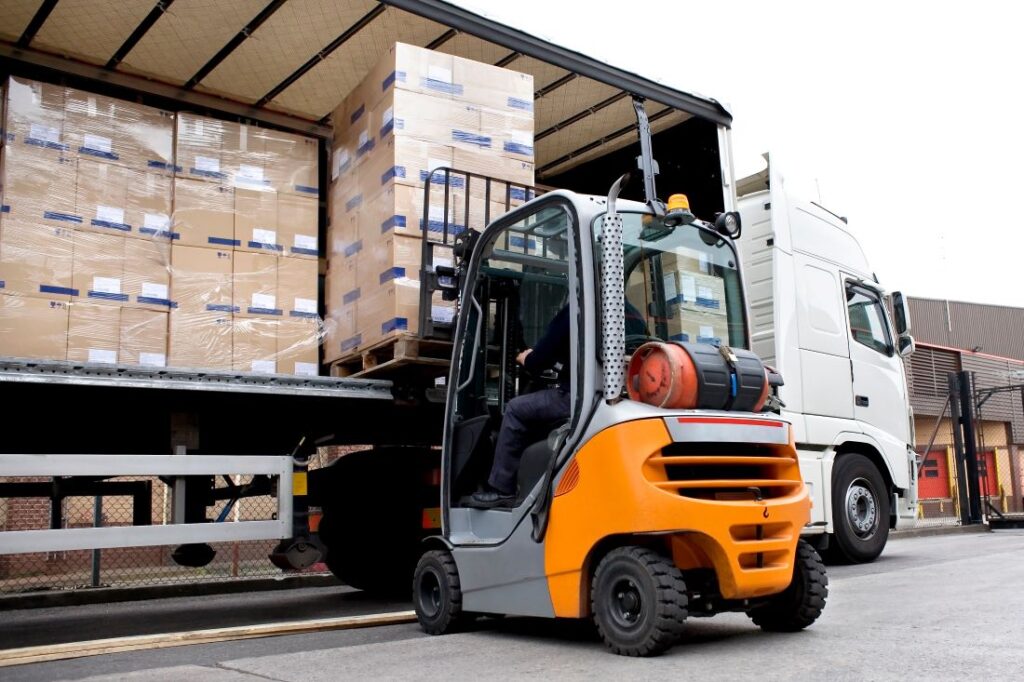
Forklifts are moving in and out.
Shipping teams are working against pickup times.
Drivers and outside carriers are entering the facility.
People are trying to keep freight moving without slowing production down.
That pace is exactly why dock problems become so hard to unwind later.
The loading dock is not just a shipping zone. It is one of the last control points the plant has before product leaves the building. If something is damaged, misplaced, shorted, or stolen in that area, the business may not find out until the truck is long gone and someone else is already disputing the story.
That is why loading dock theft Tulare manufacturing teams worry about should not be treated like a side security issue. It is an operations problem, a customer issue, and in some cases a claims problem all at once.
Freight Disputes Get Expensive Fast
A shipment issue rarely costs only the value of the product.
It costs management time.
It costs shipping time.
It costs attention from supervisors who should be focused on current operations.
It creates friction with customers and carriers.
And if nobody can clearly show what happened, the manufacturer often absorbs the loss just to move on.
That is where plants start bleeding money in a way that does not always show up cleanly on a report.
The dock crew is stuck answering questions.
Operations is trying to verify counts.
Shipping is reviewing paperwork.
Leadership is trying to decide whether the issue was internal, carrier-related, or something that happened after the trailer left.
That is a lot of drag created by one weak spot in the process.
Most Plants Think They Have Documentation Until They Need Real Proof
A lot of facilities assume the paperwork will protect them.
There is a bill of lading.
There is a carrier signature.
There are pallet counts.
There may even be internal notes.
That all helps, but it does not always answer the question that matters most: what actually happened at the dock?
Paperwork usually confirms what was supposed to happen.
It does not always prove how a pallet was handled, whether it was already compromised, whether an unauthorized person entered the area, or whether a skid sat exposed in the wrong lane during a shift handoff.
That gap is where disputes live.
Koreen Brown, Director of HR and Compliance at Securis, described a situation a lot of plant managers will recognize: “I had an employee lose a valuable piece of equipment used to process material. I was able to identify the employee with People Analytics and track their location with our camera system and find the missing piece of equipment.”
That example matters because not every dock issue starts with visible theft. Sometimes it starts with something missing, misplaced, or handled in a way nobody can verify cleanly after the fact.
The Real Problem Is How Long It Takes to Get to the Truth
This is what makes dock issues so frustrating.
The team usually has some version of the story.
What it often does not have is certainty.
Carlos Roy, Security Specialist at Belimo, said, “In the past, sifting through data felt like looking for a needle in a haystack. With Verkada, hours have turned into minutes. Beyond speed, it’s the precision and insights from our new cameras that highlight the evolution in our security technology.”
That quote lands because loading dock issues are time-sensitive. If the plant can verify what happened quickly, the issue stays manageable. If the team spends hours trying to piece together trailer activity, pallet movement, and timing, the dispute starts running the day.
Belimo’s daily operation includes 350 people onsite and 30 to 40 trucks in motion every day. That is a reminder that once movement scales up, speed of understanding matters just as much as the original event.
A plant in Tulare does not need to match Belimo’s footprint to feel the same pain. All it takes is enough shipping activity and not enough visibility.
Access Around the Dock Matters More Than Most Plants Admit
The loading dock is not just about freight. It is also about who is moving through the area and when.
That is part of what makes it vulnerable.
Colin Walsh, Service Desk Manager at Symington’s Limited, said, “The access control system, integrated with cameras, allows only authorised personnel to access sensitive areas. The ability to monitor and control access remotely through the Verkada Pass mobile app has been a game-changer for our IT team, allowing us to respond to incidents quickly—even when offsite.”
That may sound like an IT quote, but the operational takeaway is obvious. When the plant knows who accessed sensitive spaces and can verify movement quickly, investigations get cleaner and decisions get faster.
For Central Valley manufacturers, that matters around shipping lanes, dock-side inventory, restricted staging zones, and after-hours movement.
Because loading dock theft Tulare manufacturing plants deal with is not always about someone cutting a lock. Sometimes it is about weak control over who had access, what got moved, and when it left.
The Dock Tells You More About the Plant Than People Think
A messy loading dock usually points to bigger process issues.
Poor staging.
Unclear handoffs.
Congested forklift paths.
Weak accountability around pickup and transfer.
If those issues are present at the dock, they are usually showing up elsewhere too.
That is why some of the best operational value comes from looking at the dock not just as a risk area, but as a place where inefficiency and exposure become visible at the same time.
If the plant cannot clearly follow what is happening there, it is probably losing more time and control than leadership realizes.
The Better Question for Plant Managers
The real question is not whether your dock has had problems before.
The better question is whether your team can quickly prove what happened when something goes wrong.
Can you verify whether a pallet was loaded?
Can you confirm the condition it left in?
Can you establish who was in the area and when?
Can you sort out a shipping dispute without losing half a day to interviews, guesswork, and paperwork?
If the answer is no, or not easily, then the plant probably has a visibility problem that is costing more than anyone likes to admit.
Manufacturers across Tulare, Visalia, Fresno, and the Central Valley are taking a harder look at how dock activity affects inventory accountability, freight claims, and shipping consistency. If your team has dealt with missing pallets, damaged shipments, unclear dock handling, or disputes that took too long to sort out, it may be time to look more closely at what is actually happening in your shipping lanes.
PC Solutions works with manufacturing operations teams across the region to identify blind spots around loading docks, staging zones, forklift routes, and other parts of the facility where accountability tends to break down under pressure. As a Certified Gold Integrator of Verkada, we help plants bring more clarity to the handoff points where product leaves the building and disputes usually begin. A complimentary Manufacturing Visibility Assessment can help your team see where stronger visibility may reduce freight disputes, protect valuable inventory, and give operations a much clearer picture of what is happening before product leaves the dock.
Schedule your assessment here: Manufacturing Visibility Assessment