
Air quality monitoring on Visalia and Porterville campuses is not just a facilities issue anymore.
For schools across Visalia, Porterville, and the surrounding Tulare County communities, it has become part of a broader conversation about student wellness, vape detection, wildfire smoke, and how quickly staff can act when indoor conditions change. That matters because most of these issues do not arrive as neat maintenance tickets. They show up during passing periods, in restrooms, in locker room areas, in crowded interior spaces, or during outdoor smoke events when site leaders are already stretched.
The old model is reactive. Someone smells something. A student reports it. A teacher raises a concern. By then, the campus is already behind the issue.
Why air quality monitoring on Visalia and Porterville campuses matters now
This part of the Valley has its own realities.
Districts here are balancing older schools and newer buildings. Some campuses have ventilation differences that only become obvious under stress. Wildfire smoke can change conditions quickly. Student vaping continues to show up in exactly the areas where direct supervision is weakest. And once concerns start to repeat, the district is left trying to confirm patterns after the fact.
That is why visibility matters.
Schools do not just need data. They need alerts in time to do something useful with them.
Vaping is usually where the visibility gap shows first
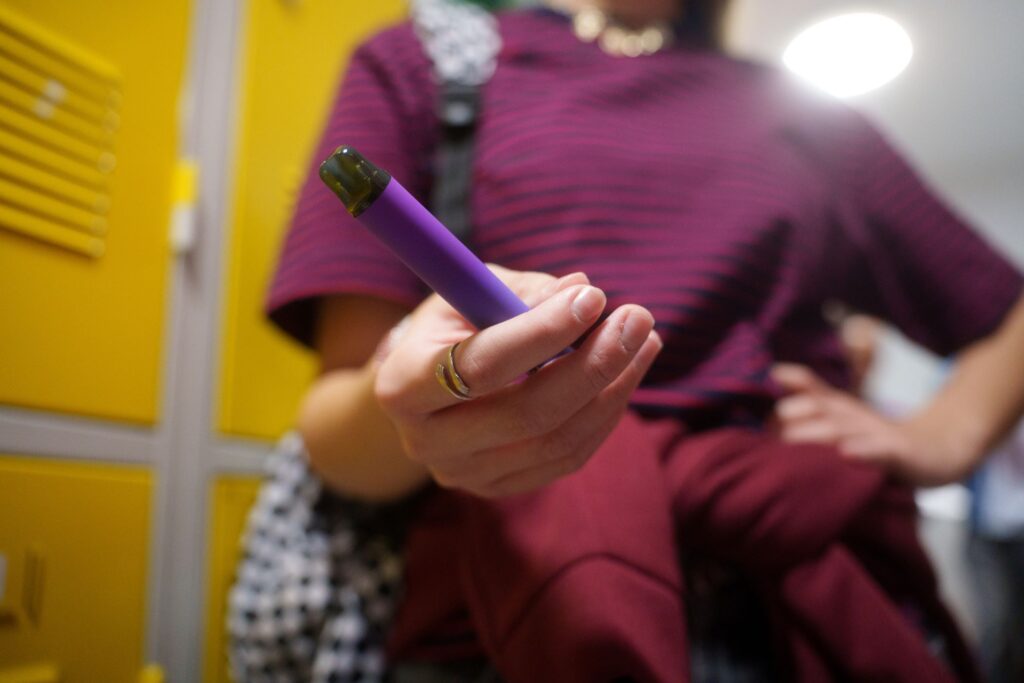
Most vaping incidents happen where staff coverage naturally drops off for a few minutes. Restrooms, side hallways, transitional areas, and locker spaces become recurring problem points because they give students privacy and give administrators headaches.
Without better monitoring, schools are left relying on delayed reports and rumor. That usually means more time spent investigating and less confidence in what actually happened.
A stronger approach gives schools earlier signals and better context. That helps administrators move faster, document more consistently, and avoid turning every concern into a guess.
School District of Mondovi reported an 83% reduction in vape events after building a more integrated environment around sensors and contextual visibility.
Poor indoor conditions become an instructional problem fast
Air quality is not just about a building system doing its job in the background. If indoor conditions are off, the impact eventually reaches students and staff.
Smoke intrusion, elevated particulates, and repeated indoor air issues affect comfort, concentration, and how confidently a campus can keep normal operations moving. In Tulare County, where wildfire season is not abstract and changing air conditions are a real operational concern, that becomes a campus readiness issue.
The Riviera Ridge School used environmental alerts during wildfire season to act sooner when thresholds changed. Rafael Cordero, Director of Information Technology Services, said, “We receive alerts if the air quality falls outside established thresholds, allowing for immediate action.”
That is the point. Immediate action matters more than delayed awareness.
Integrated visibility matters more than standalone sensors
A lot of schools still separate these workflows. Facilities sees one thing. Security sees another. Site leadership sees something else. By the time those viewpoints connect, too much time has already passed.
The better model is a more cohesive environment where alerts, context, and review are easier to bring together. La Cañada Unified School District is a good example. Jamie Lee Lewsadder said, “We have everything we need in one cohesive environment.” The district used that approach not just for entry management, but also for environmental concerns like vaping.
That matters for Visalia and Porterville districts because consistency across campuses is hard enough without forcing teams to piece together separate systems every time something happens.
What districts should evaluate now
If you are responsible for safety, student services, technology, facilities, or district operations, start here:
Is air quality monitoring on Visalia and Porterville campuses helping you catch issues early?
If not, the district is still reacting too late.
Can your team separate an isolated complaint from a repeated pattern?
If not, staff are making decisions without enough visibility.
Are smoke and air events triggering clear, timely action?
If not, the workflow is too slow.
Are security, facilities, and site leadership working from the same information?
If not, the process is fragmented.
For districts in Visalia and Porterville, stronger environmental monitoring is not about adding another gadget to the wall. It is about creating earlier awareness around issues that already affect campus operations.
PC Solutions works with Central Valley organizations that need security and facilities decisions to hold up under real operational pressure. As a Certified Gold Integrator of Verkada, PC Solutions helps school leaders identify where environmental blind spots, vaping response delays, and disconnected systems are making campus oversight harder than it should be.
If your district is trying to get a clearer view of indoor conditions, student wellness concerns, and faster campus response, the Smart Solutions for School Security page is a practical next step. It gives more detail on integrated school security tools and includes a complimentary 30-day trial for teams that want more information before moving further. District leaders can also review broader guidance through the California Department of Education school health and safety resources