
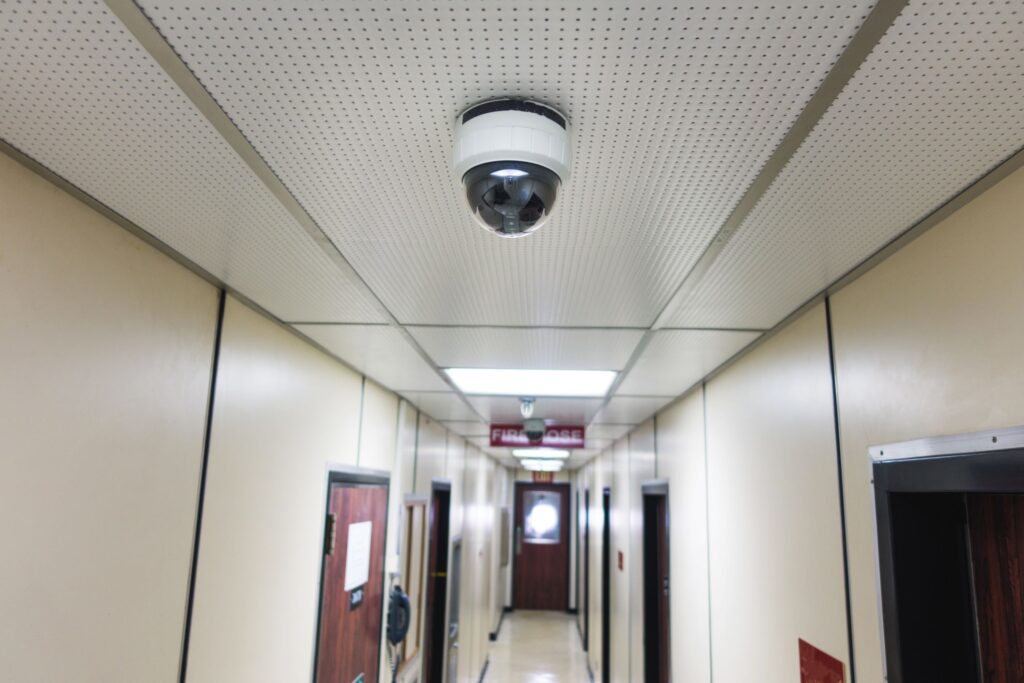
Tulare County school security oversight usually starts breaking down long before anyone says it out loud.
It shows up when one campus can pull footage quickly and another cannot. When one school has a clean visitor process and another is still working off inconsistent habits. When a district office wants an answer but staff have to jump between camera feeds, access logs, and front-office information just to piece together what happened. By the time the picture is clear, time has already been lost.
For school districts across Visalia, Tulare, Porterville, Hanford, and surrounding communities, that is the real issue. The problem is not simply whether a campus has cameras, locked doors, or visitor procedures. The problem is whether district leadership can actually see enough, across enough sites, to respond consistently.
That is what makes Tulare County school security oversight such an important conversation now. Multi-campus visibility is no longer a nice-to-have. It is part of how districts investigate incidents, verify activity, support school leaders, and reduce operational drag across growing or widely spread campuses.
Why Tulare County school security oversight gets harder as districts grow
A single school can sometimes survive on informal habits longer than it should.
A district cannot.
Once multiple campuses, support sites, admin offices, athletic facilities, and front-office workflows are involved, disconnected tools start creating very real problems. One person knows how to find door events. Another knows how to pull video. Someone else handles visitors. A principal knows their own site well, but district leadership still cannot see the whole picture without multiple calls, screenshots, and handoffs.
That is where oversight gets weak.
And in Tulare County, that challenge is not theoretical. Districts are often managing different campus ages, different layouts, different staffing realities, and different levels of modernization across schools. Some sites are compact. Others are more spread out. Some have stronger office processes than others. The larger the footprint, the harder it becomes to keep response consistent if the systems do not work together.
1. Separate systems create slower response
One of the biggest gaps in Tulare County school security oversight is tool fragmentation.
If cameras live in one place, access control in another, visitor workflows somewhere else, and alerts in yet another dashboard, every incident becomes a stitching exercise. Staff are forced to build context manually, and that wastes time at the exact moment the district needs clarity.
That delay matters more than many districts admit. The time lost between systems is often the difference between a quick answer and a slow one. It affects how fast a principal can respond, how quickly a safety lead can verify details, and how confidently district leadership can support a site.
South Washington County Schools, which serves 19,000 students, reduced investigation time by 50% after moving to a cloud-based platform with AI-powered search tools. That is not just a technology win. It shows what happens when staff spend less time hunting through disconnected systems and more time confirming facts.
2. Campus-by-campus habits create uneven oversight
A lot of districts think they have one security process when they really have several.
One school may be disciplined about reviewing incidents. Another may lean heavily on one office manager or one site administrator. Another may have decent tools but weak consistency. From the district office, it can look like everything is covered. On the ground, the experience is uneven.
That is a major oversight problem.
Because the issue is not just whether each school can function on its own. It is whether district leadership can rely on the same level of visibility, verification, and response across all sites. If the answer changes campus by campus, the district is carrying more risk than it realizes.
3. District leadership needs one usable picture
School security oversight should not depend on who happens to be physically on campus.
A principal may know the site well. A superintendent, district safety director, or technology leader needs a broader operating picture. They need to be able to verify what is happening, support a campus, and make decisions without waiting for fragments of information to trickle in.
That is why centralized visibility matters so much.
Mountain View Los Altos Union High School District moved to a cloud-based system with centralized management and integrated visibility across campuses. Bob Fishtrom, Director of IT Services, said, “The ease of use has been transformative, and ultimately, this helps us keep our campuses safe across multiple cities.”
That quote hits the point directly. If the district cannot use the system easily under pressure, it is not really helping oversight.
4. Limited staffing makes oversight harder, not less important
Most K-12 districts are not overflowing with extra safety staff.
They are asking principals, front-office teams, facilities, IT, and district administrators to carry overlapping responsibilities. That means the system has to reduce manual effort, not create more of it.
Iredell-Statesville Schools, one of North Carolina’s largest districts with more than 20,000 students across 41 buildings, replaced fragmented systems with a single platform combining cameras, access control, air quality sensors, intercoms, and guest management. With limited IT staff, the district improved coordination and response by consolidating tools into one environment. In one case, staff used the person-of-interest feature to locate a student with a weapon and resolve the situation within an hour.
That is the part districts should pay attention to. Better oversight is not about building a flashy command center. It is about helping stretched teams work from one cleaner picture.
5. Tulare County school security oversight should be measured by coordination, not coverage
A district can have cameras, locked doors, visitor check-in, intercoms, and alerts and still struggle operationally.
Why?
Because ownership of devices is not the same thing as coordination.
The sharper question is whether the district can command the environment well enough to verify incidents, support campuses, and reduce delays. In a Harris Poll survey conducted on behalf of Verkada, 85% of security leaders said it is very or extremely important to have multiple physical security products integrated into one centralized system, and 81% said real-time threat tracking is important in their physical security systems.
That lines up with what many school districts are already feeling. The issue is no longer whether each system works by itself. The issue is whether they work together when something happens.
What Tulare County districts should evaluate now
If you are responsible for district safety, operations, facilities, or technology, these are the practical questions worth asking:
Is Tulare County school security oversight consistent across every campus?
If not, district response is already uneven.
Can your team verify cameras, door activity, and visitor workflows from one place?
If not, staff are still losing time between systems.
Does district leadership get one usable picture during an incident?
If not, oversight is too dependent on handoffs.
Are your campuses following one security workflow or several?
If the answer varies by site, consistency is already breaking down.
Is your current environment reducing manual effort or adding more of it?
If staff have to chase information every time something happens, the system is still too fragmented.
For Tulare County school districts, stronger oversight is not about making security look more sophisticated. It is about making sure visibility holds up across real campuses, real staffing limits, and real day-to-day pressure.
PC Solutions works with Central Valley organizations that need security tools to make sense in the reality of multi-campus school operations. As a Certified Gold Integrator of Verkada, PC Solutions helps school leaders evaluate where disconnected tools, slow verification, and uneven visibility are making district response harder than it needs to be.
If your district is trying to get a clearer view of how cameras, access control, visitor workflows, and alerts should work together, the Smart Solutions for School Security page is a practical next step. It offers more information on unified school security strategies and includes a complimentary 30-day trial for teams that want to explore what a more connected approach could look like.
District leaders can also review broader planning guidance through the California Department of Education school safety resources.